How to Understand Education Research
Education research is the systematic collection and analysis of data related to contexts in which people learn and develop.
Specifically, mathematics education research is focused on contexts in which people learn and develop mathematically. This field of research is broad, including various dimensions of human life, such as teaching, learning, human development, curriculum, and systems of schooling.
What is the big picture of education research?
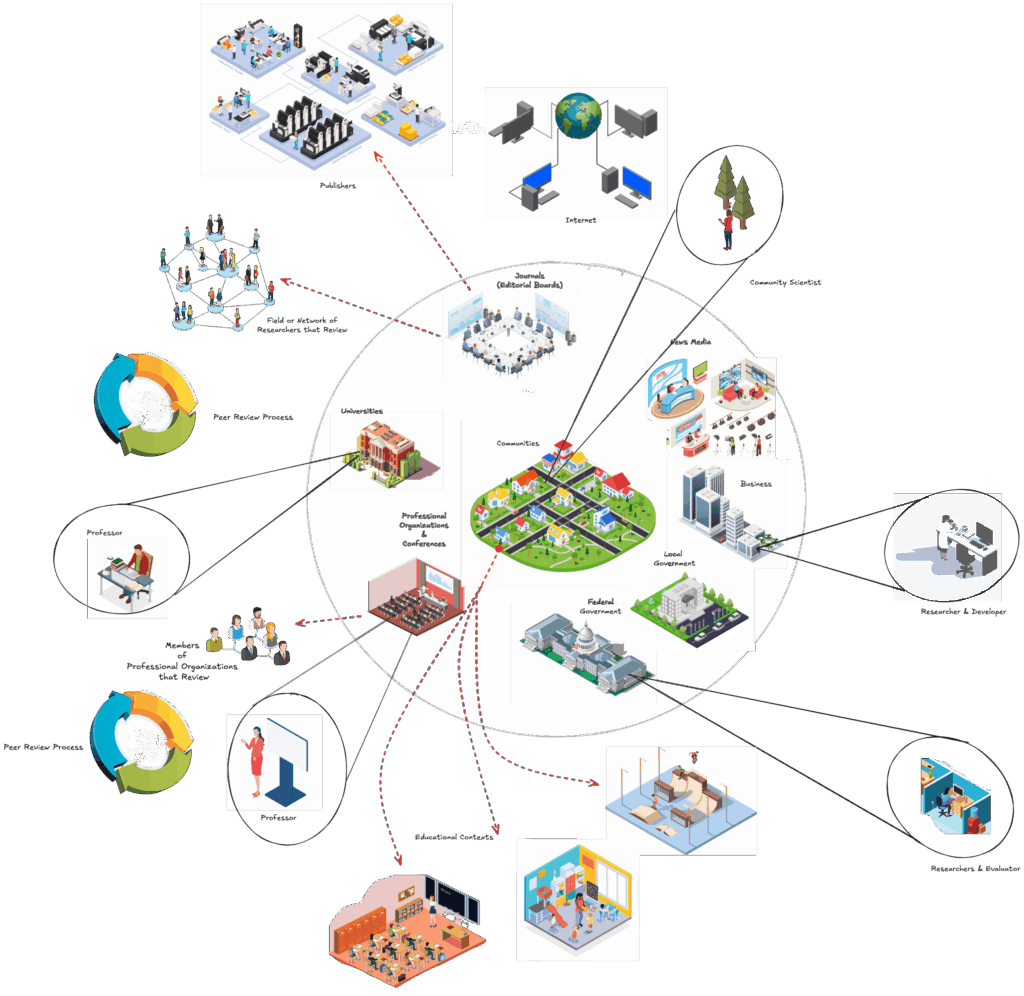
Education research is a part of the broader society, including communities, government (federal and local in the U.S.), business, news media, universities (or higher education), organizations, and the internet. This is the big picture.
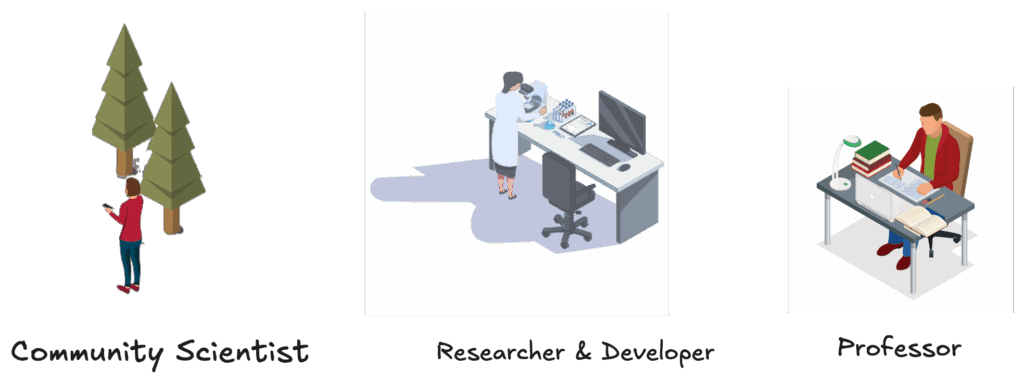
- Researchers and scientists are part of communities, higher education, the government, and business.
- These researchers and scientists conduct studies collect information in educational contexts. They organize this information as data, analyze the data, and publish their results in scientific journals.
- These published results or findings are then used by people in communities, government, business and proliferated by the news media.
- These findings are used by educational professionals to inform their decisions and practices, for example, in classrooms.
How does research lead to scientific knowledge?
Research leads to scientific knowledge through the process of publication in academic or scientific journals. Knowledge is always available in communities and educational contexts. The process by which knowledge becomes “scientific” is through the process called peer review.
When a researcher conducts a study to collect information and organize that information as data, the data is analyzed and offered to the scientific community at conferences hosted by professional organizations or academic or scientitfic journals. In both cases, the analyzed research (written up by researchers, scientistics, and scholars) is reviewed by other researchers, namesly members of professional organization or experts in their field.
These reviews provide feedback on the study described in the manuscript or proposal that a researcher submits to the community. The reviewers determine whether the submitted study meets the standards of the scientific community. If the submitted proposal or manuscript does not meet the standards, revisions are requested or the work is rejected. If the work does meet the standards of the scientific community, it is accepted and allowed to presented or published. At this point, reserach becomes a part of the scientific canon of knowledge.
All studies conducted by researchers do not become a part of scientific knowledge. For example, some research that is conducted inside of businesses can be treated as proprietary and not shared with the scientific community.
What is the point of doing education research?
There are at least six aims of doing education research, which are not mutually exclusive:
- Exploration: Investigating a new area to gain initial understanding and develop a theory for how an educational phenomenon occurs.
- Description: Providing a detailed account of what an educational phenomenon is— its parts and characteristics.
- Explanation: Identifying why an educational phenomenon occurs in a particular way.
- Application: Using existing understandings to solve practical problems.
- Design: Using existing understandings as a starting point to develop new explanations, applications, and phenomenon to explore.
- Evaluation: Testing the effectiveness of a design in achieving specified goals.
Ultimately, these different aims provide knowledge in the form of theory (how things work) and claims (conclusions) about educational phenomena. As people engage in research, theories and claims may be refuted (shown to be untrue), repaired (shown to be insufficient), expanded (elaborated upon), or replicated (shown to be persistent). When theories are refuted or expanded, there are shifts in our understanding of that educational phenomenon—either through nuancing our understanding of how things work and associated conclusions, providing alternative explanations of how things work, or establishing new conclusions. These shifts are not a weakness in doing research— these shifts are at the core of the creation of human knowledge and foundational to the enterprise of science.
Who does education research?
In short, people do research. This means that research is a complex process that is subject to all of the conditions of human life, which includes all of our societal problems at a broad scale and persistent relational challenges between people at a smaller scale.
Anyone can engage in the practice of education research, which simply means collecting and analyzing data about an educational context or problem in a systematic way.
The professional work of doing research is typically conducted by people who have earned a doctoral degree (or Ph.D.) and studied the practices of data collection and analysis in a particular field of study. These individuals typically spend 5 or more years engaged in coursework and apprenticeships, culminating in an independent research project known as a dissertation.
Doctors of education work in a variety of places, including universities as professors, research centers, government and non-profit agencies, school districts, and within the business sector as analysts, scientists and researchers.
What is a context in which people develop and learn mathematically?
Because people learn and develop mathematically everywhere, mathematics education research can take place anywhere, such as classrooms, playgrounds, or even an factory assembly line.



What are the big ideas in research?
Research often relies on several big ideas:
- Theory establishes the basic assumptions for how a researcher sees an educational phenomenon and essentially forwards a description and explanation for what is important in and about an educational phenomenon and how that phenomenon works.
- Methods are normative practices for collecting information about an educational phenomenon; organizing, structuring, and analyzing that information as data; and interpreting those data to draw conclusions.
- Claims are the conclusions that are drawn from the analysis, which are supported with data as evidence.
Is all research the same?
The simple answer is no.
Education research has scientific purposes for expanding our knowledge and understanding of human life—for the “sake of science,” and education research has practical purposes for improving the conditions in which people learn and develop in immediate, pragmatic ways. These purposes are not mutually exclusive, nor are these purposes exhaustive.
Doing research for scientific purposes to expand knowledge is often referred to in the profession as basic research, whereas doing research for practical purposes is commonly referred to as applied research.
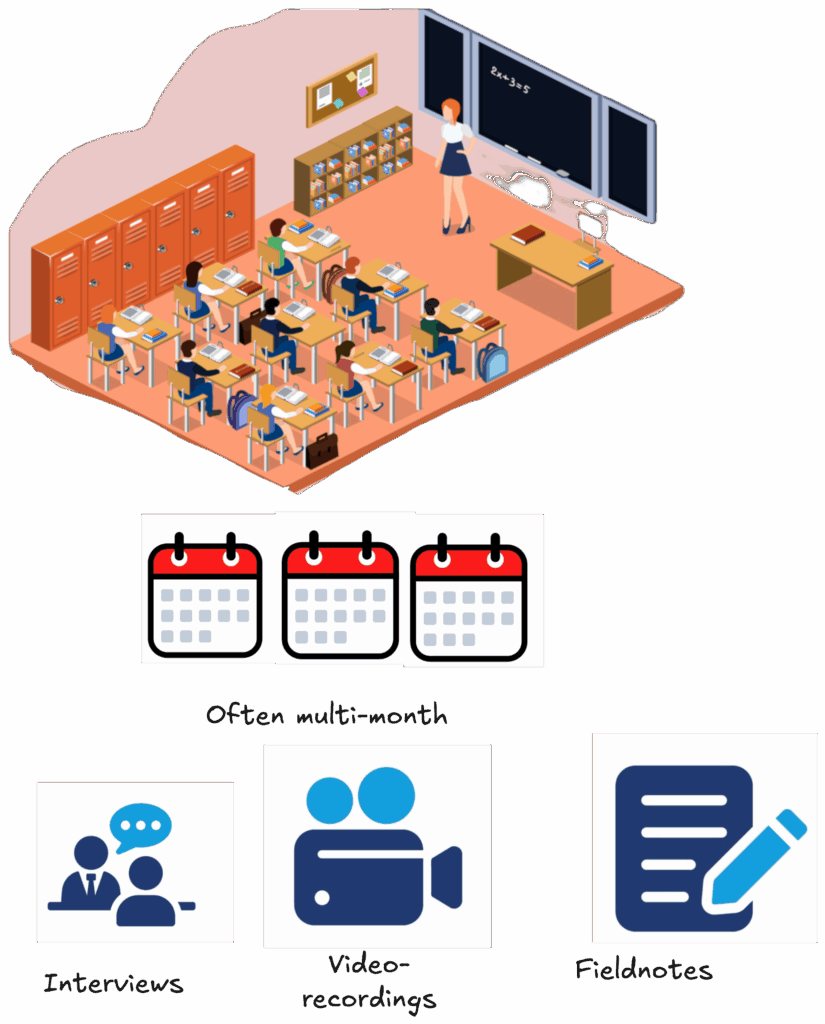
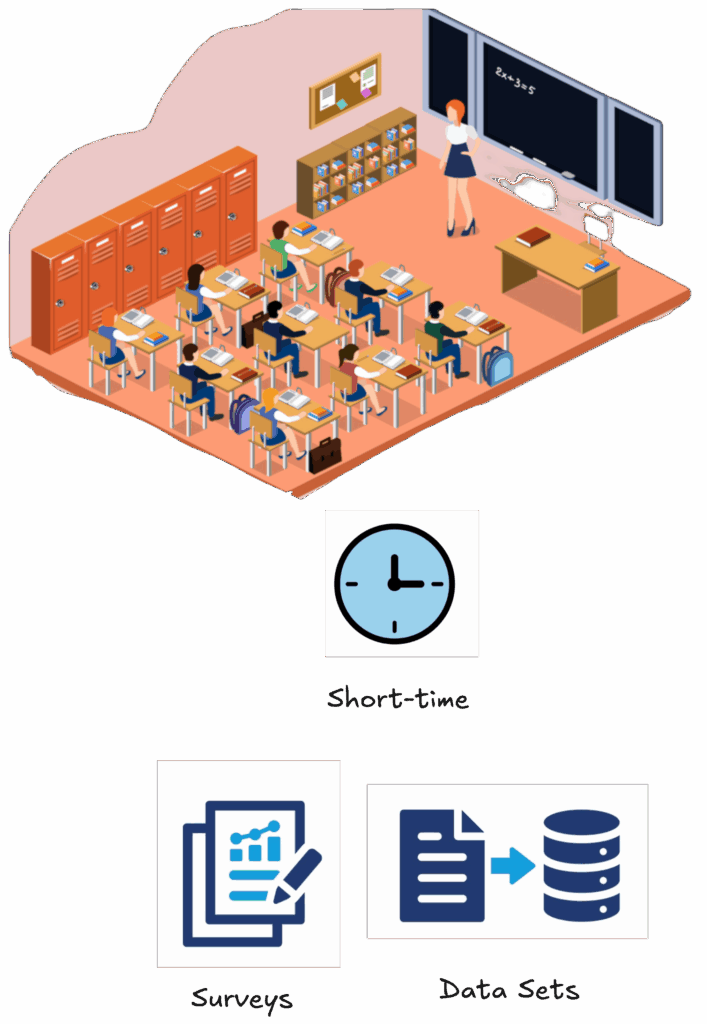
There is also different approaches to collecting information and organizing this information into data sets—these different approaches to building data sets are called methods. Some methods involve, for example, collecting surveys about students, classrooms, or schools ; observing students, classrooms, and schools; or interviewing students, teachers, and parents. When the information about an educational context is primarily organized numerically to measure, this research is called quantitative research. When the information about an educational context is primarily organized to describe, this research is called qualitative research.
QUALITATIVE RESEARCH
QUANTITATIVE RESEARCH
What are the products of education research?
The products of research are varied and include publications, design-based products (e.g., curriculum materials), and talks and presentations (e.g., at professional conferences), as well as relationships and networks.
- Articles & Books
- Reports
- Presentations & Talks
- Tools & Resources
- Policy Briefs
- Advocacy Statements
- Professional Networks
What does it mean to have different research disciplines or fields?
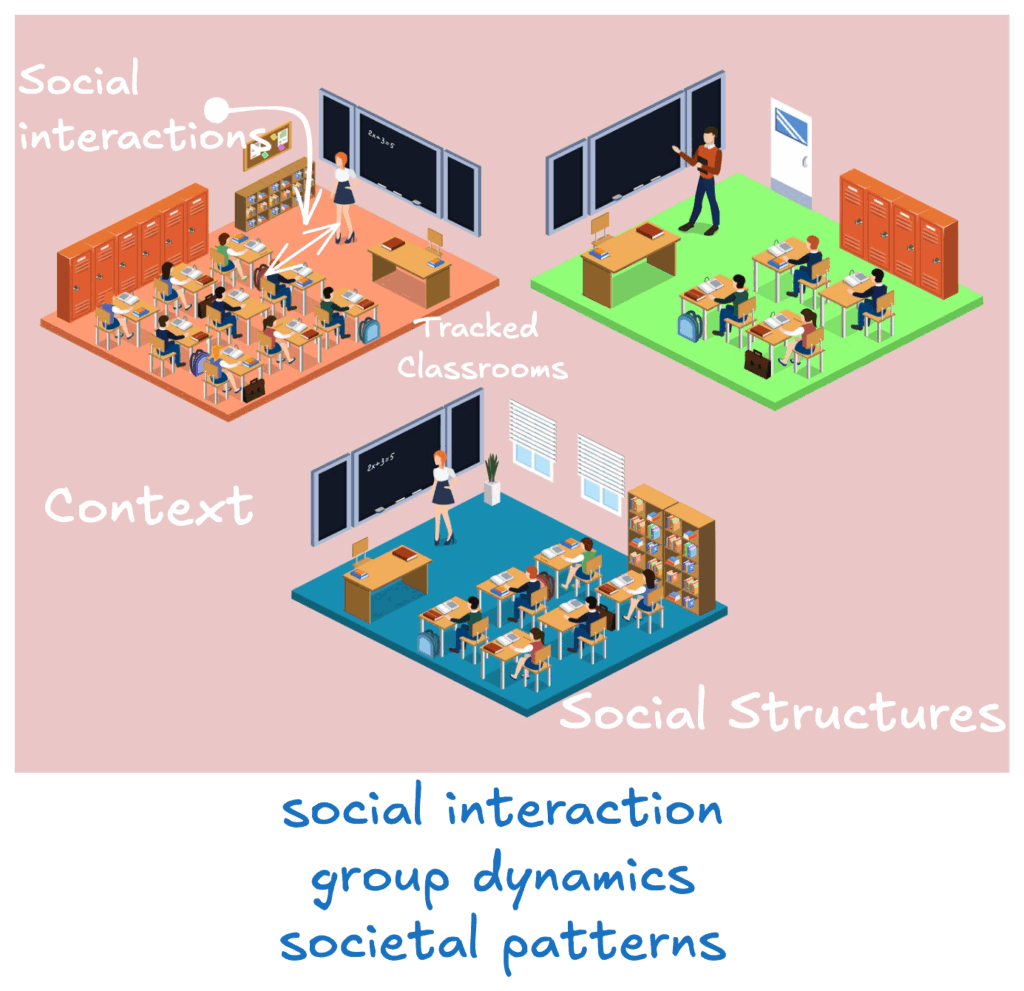
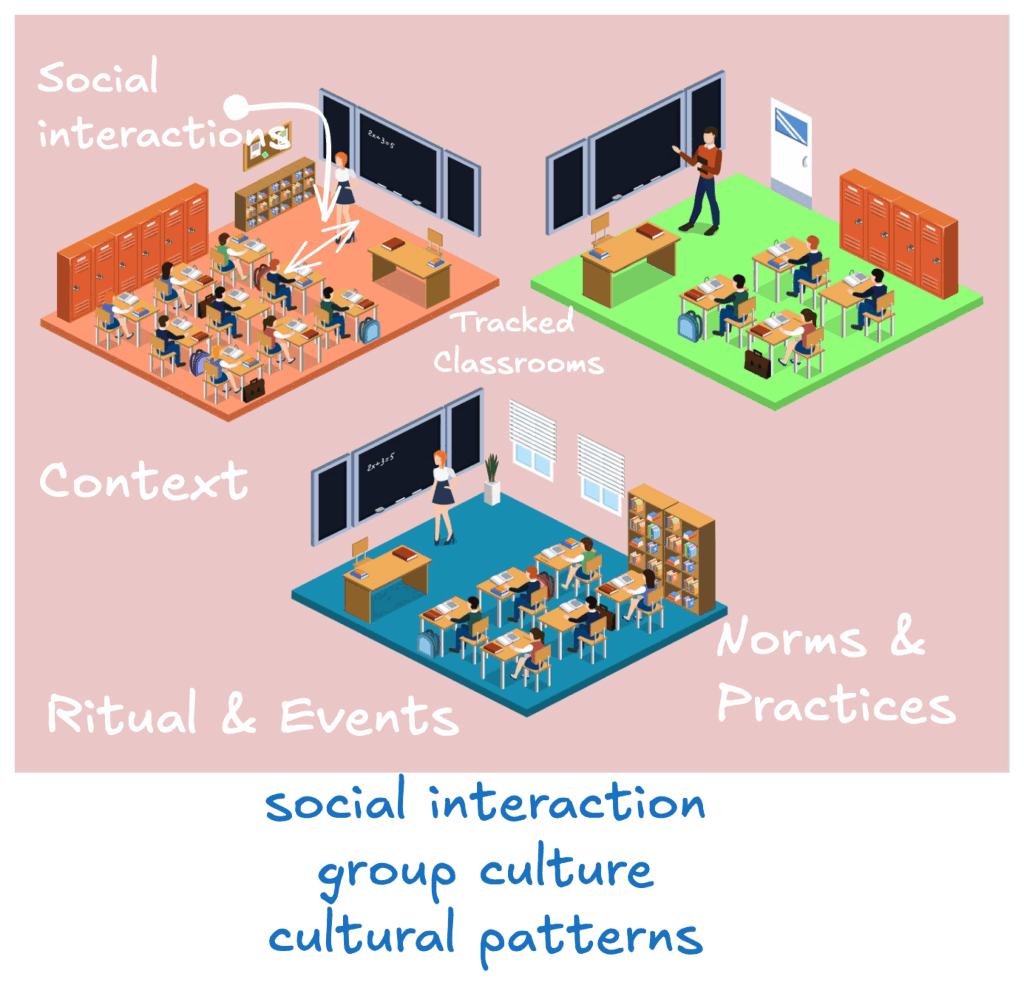
In social science research related to education, there are different disciplines or fields of research. These disciplines rely on different theories of what is important to consider in human life. There are many disciplines and subdisciplines, which may be familiar, like sociology, anthropology, and psychology.
SOCIOLOGY
ANTHROPOLOGY
PSYCHOLOGY
Of course, there are multiple disciplines that could be included in this list, including philosophy, history, linguistics, information sciences, economics, political science, and so on. Each of these disciplines has a particular set of assumptions, foci, and questions that they pursue in relation to education research. Education is an interdisciplinary space that combines two or more of these disciplines, such as learning sciences.
Different disciplines can focus on different areas of study or fields. Fields include teaching and teachers, special education, mathematics education, curriculum, assessment, and so on.
How do I know when and what research is being used?
Research is used in a variety of ways for different reasons. For example, when practitioners are making decisions, they often refer to research to make sense of what practices, curriculum, and training are most useful to achieve organizational goals. Typically, research is indexed through citations to research. Because “scientific knowledge” is published or presented, studies that make claims about practices of teaching, outcomes of learning, or curriculum use, as examples, research can be indexed through a citation to a publication or presentation.
What is a citation?
A citation is a refence to a publication or presentation of a study or scholarly work. Citations usually include an author name, a title of the reference, a date, and the venue of presentation (typically at a conference) or a publisher, including specific periodical or journal name. Citations can often be read as parentheticals within written text or footnotes.
Why is publication important to research?
An unpublished or presented study or scholarly work, like a white paper, is typically not peer-reviewed. This means an author (researcher) has written up a study or scholarly work, but this work has not been vetted by a scientific community. Only published or presented work in well-respected outlets, journals or conferences, has received a thorough expert review. Work that has not been reviewed and sanctioned by schlolars knowledgeable in that field (or areas of study) cannot be treated as “scientific knowledge,” which achieved in communities through a rigorous review process among peers.
While white papers may reference existing research throug citations, the new arguments made within a white paper relying on those citations. A white paper must be reviewed to ensure that the constructed arguments marshal evidence of cited work in a coherent, convincing, and verifiable way that does not obsure the original publications and presentations.
Is one kind of research better than others?
The simple answer is no. But the practical answer is yes.
While ideally all educational research, turned scientific knowledge through publication, should be considered as valuable, rhe use of certain research methods are elevated by particular stakeholders. For example, the government considers quantitative research that allows for causal claims and generalizations to be more desirable than more local, descriptive research. While descriptive or qualitative research may “qualify” connections towards causality, this research does not purport to establish claims within any level or certainty, beyond the immediate context in which was conducted.
There are different terms that are used to signal quality, such as: (1) research-based and (2) evidence-based.
Evidence-based is using research that can establish causal links.
Causally linked and generalizable research relies on primarily two methods: (1) randomized control trials (RCTs) and (2) single case/multiple baseline designs.
Research-based is using high-quality research.