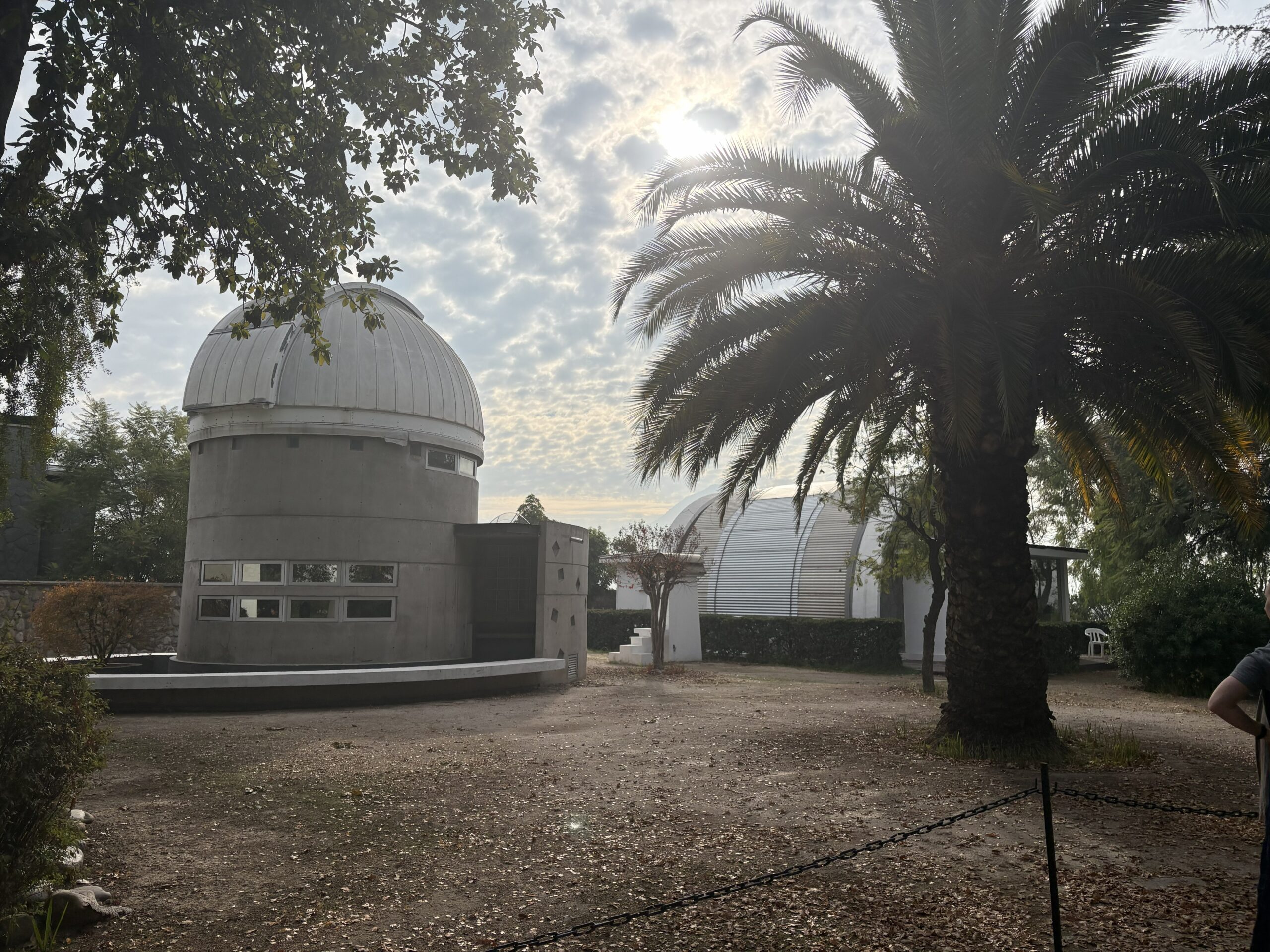
The later part of our afternoon featured a tour of the Observatorio Astronómico Nacional de Chile (OAN) which is run by the University of Chile’s astronomy department. We took a winding road up to the beautiful Cerro Calán that featured trails for public use before reaching the top where the astronomy department oversees a handful of working telescopes, a small fraction of the total number of telescopes located in all of Chile. We were able to sit with some professors and students of the department where they gave an overview of their work. A professor mentioned numerous astronomers from the University of Michigan that have participated in research thanks to the Chilean skies. It was interesting to hear how much collaboration happens within their field. It’s a small community, and there is a shared understanding among them that collaboration across university lines and international borders will help everyone better understand what’s beyond our world.
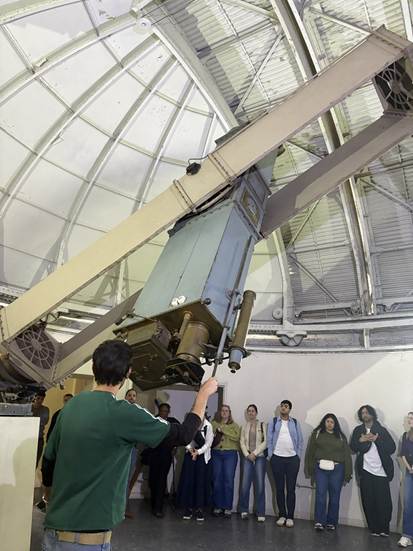
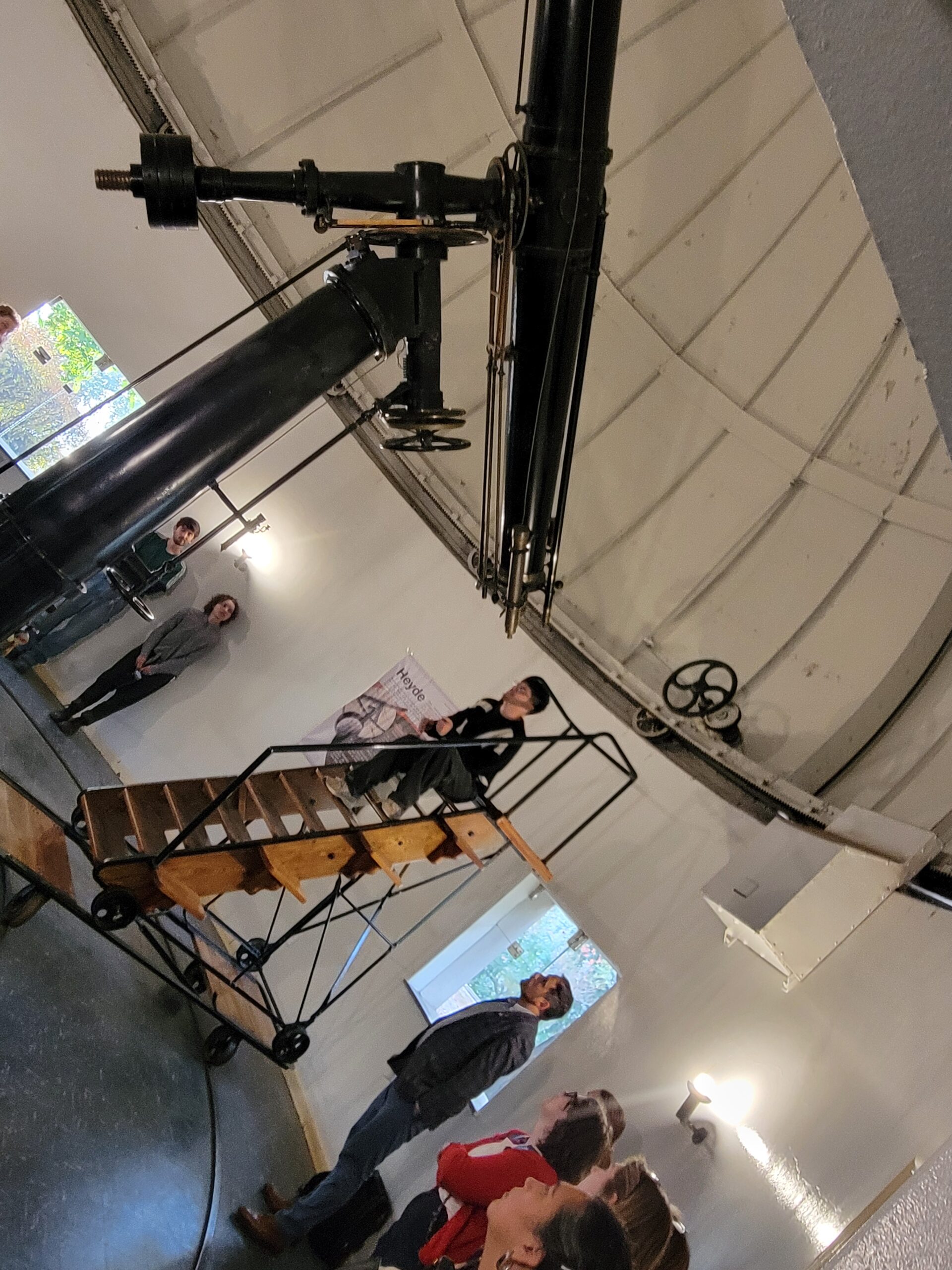
A handful of astronomy graduate students then took our group on a tour of three telescopes used for outreach. The two oldest, dating from 1894 (Gautier) and 1913 (Heyde), were originally installed elsewhere and moved at later dates to the OAN. The most recent one was the GOTO telescope gifted from the Japanese government in 2002. These telescopes provided a look into how science has progressed through Chilean higher education spaces.
Science is a critical sector of both Chilean history and their modern economy, and the knowledge we learned this afternoon of our trip reinforced how that influences their universities. Copper mining is still a large sector of their economy amongst other natural resources. Astronomy provides a source of tourism income, but also collaboration of other nations from across the globe as the country experiences around 300 nights per year of clear skies. Much like the United States, funding to scientific initiatives and research has been cut by the government. This is significant for Chilean higher education and Chile as a whole. Chile is located on a large tectonic plate which has caused numerous earthquakes throughout the years and reduced funding means that the Centro Sismológico Nacional (National Seismological Center of the University of Chile) lessens the ability for real-time earthquake tracking and early tsunami warning data. Prior to our tour of the three telescopes, while meeting with the astronomy department and talked about how they are also experiencing a lack of interest from their government in their work. Something one of the astronomy professors said helped elevate the mood and shift perspectives of what we’re all experiencing in the higher education space at the current moment: “Governments come and go, but the universe prevails.”
by Ray Stacey