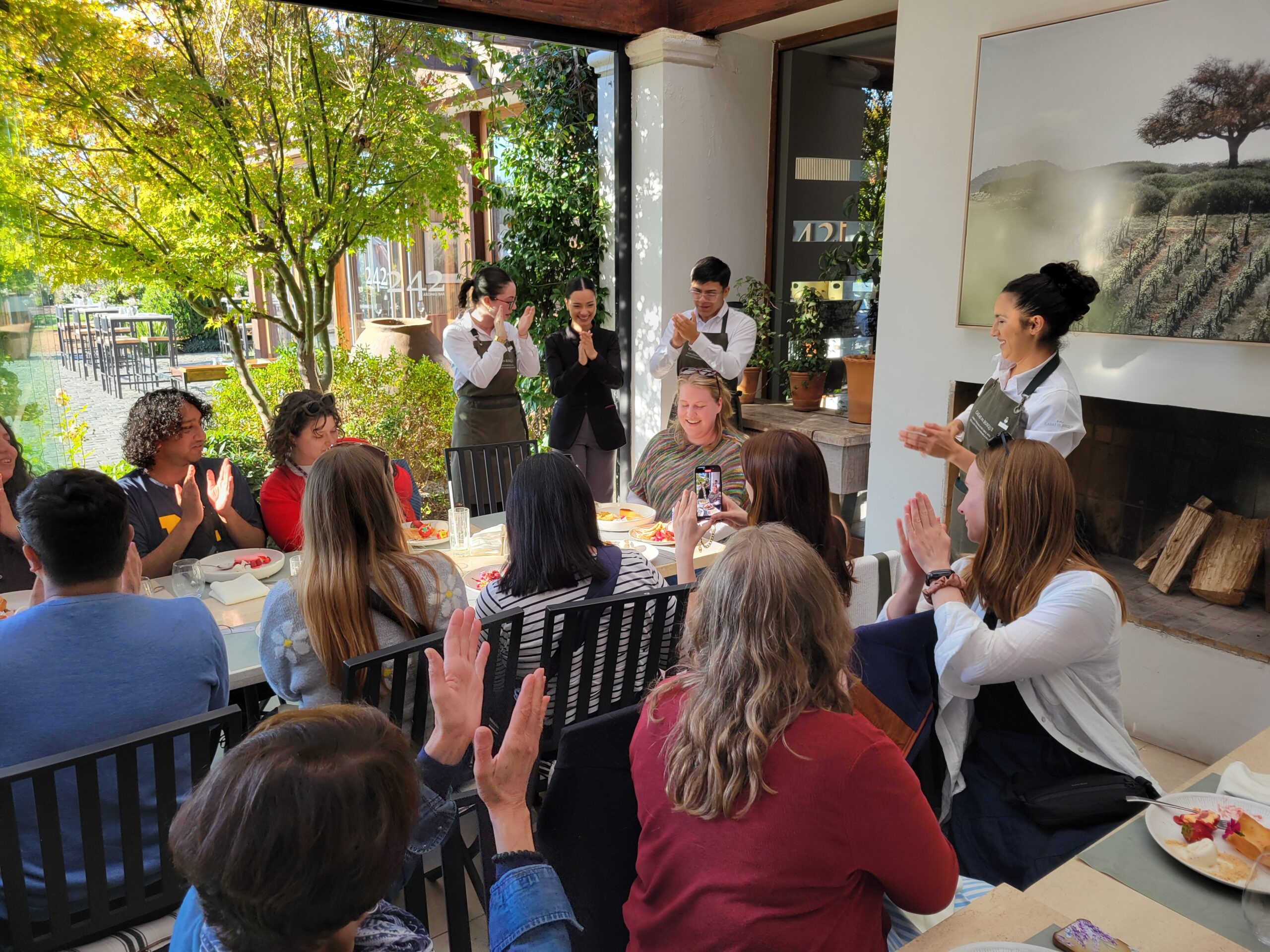
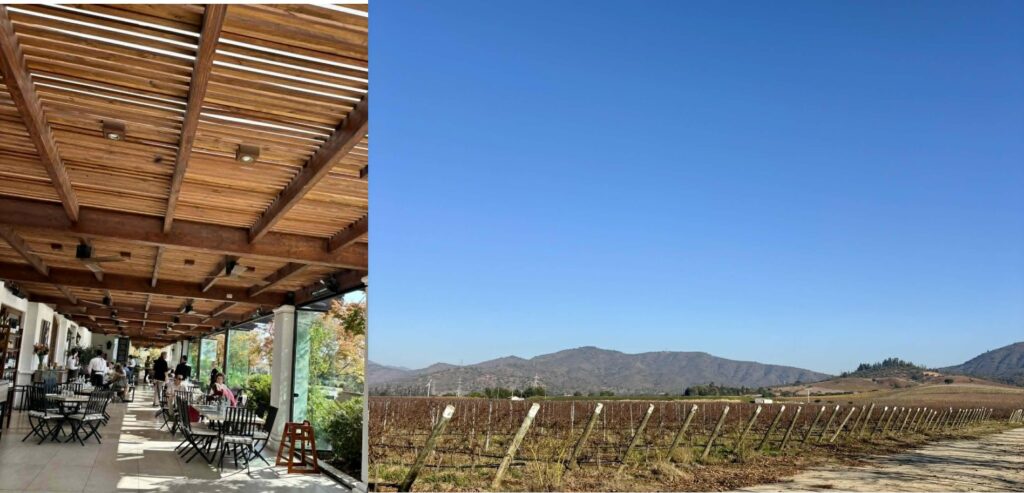
After our wine tasting, we drove to Tanino, Casas del Bosque for lunch, and to learn more about Chile’s regional planning initiatives. We ate on the open terrace, surrounded by gardens, grape fields, and mountains.
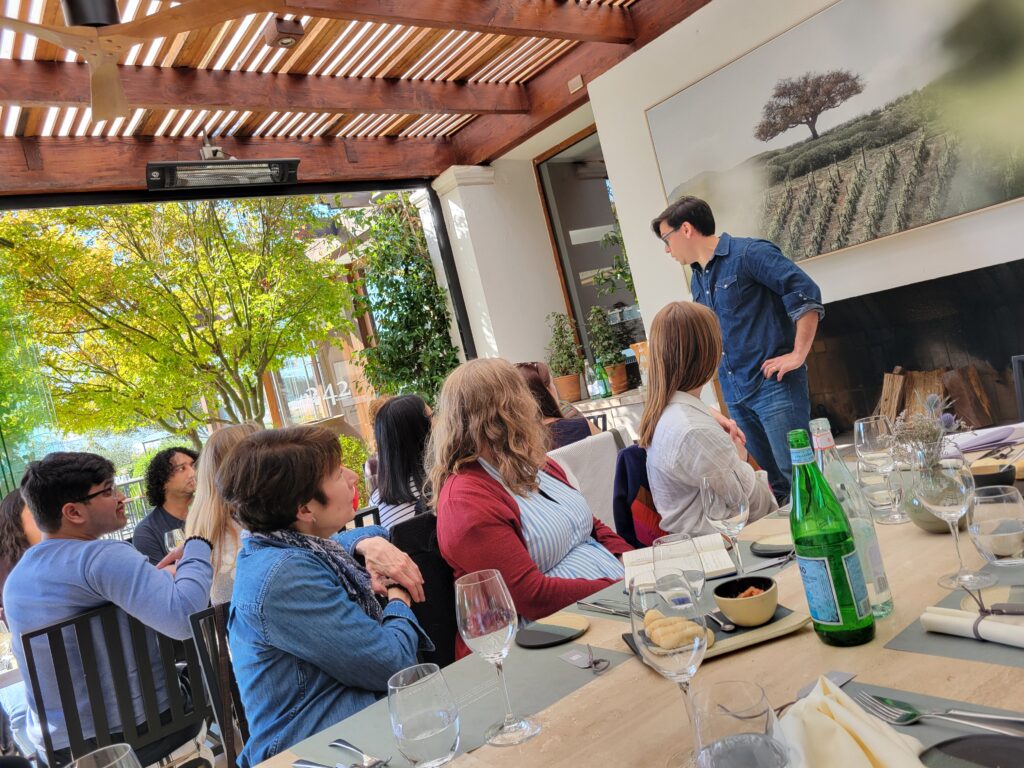
Our speaker, Álvaro Díaz Bustamante, is a partner, consultant, and tutor at Competitiveness, a small business consulting firm focused on economic development throughout the world. After we ordered our entrees, Álvaro introduced us to the Valparaiso region by telling us more about the regional planning for the area and how it intersects with local and national higher education.
We had spent the start of the trip learning about the context of Chilean higher education, including the recent history with authoritarian and democratic governments, public political engagement, and driving economic factors. That context was helpful as Álvaro helped us narrow our focus to specific economic development outside of Santiago. In 2006, the progressive government invited each of Chile’s 15 regions to determine where they wanted to allocate investment in their economic growth. In addition to expected sectors such as agriculture and tourism, Valparaiso made the unique choice to invest in higher education. The local government decided this because studies had demonstrated the economic return of student activity, showing that students spent 1.2 pesos for every peso of tuition, resulting in growth for areas like housing, transportation, and dining.
This led to an investment in private housing targeted at students over tourists. While we had learned throughout the trip that most Chilean students live with their families, Valparaiso had decided to draw students from underserved areas throughout Chile. Billing themselves as “university city”, they aimed to compete with Santiago for students willing to travel for higher education. From this effort, 40% of Valparaiso area students now come from outside the region. Álvaro described how local regional planners developed a “Study in Chile” campaign aimed at recruiting well-funded students from capital cities throughout Latin America. In addition to the economic activity generated by these students as they live, study, and play, they also benefit the university by paying full tuition. While we had gleaned that most universities in Chile are not focused on branding themselves the way we see in the United States, this felt like a small glimpse of that dynamic that we see so often in American higher education- marketing to external constituents (out-of-state or out-of-country) to increase tuition revenue.
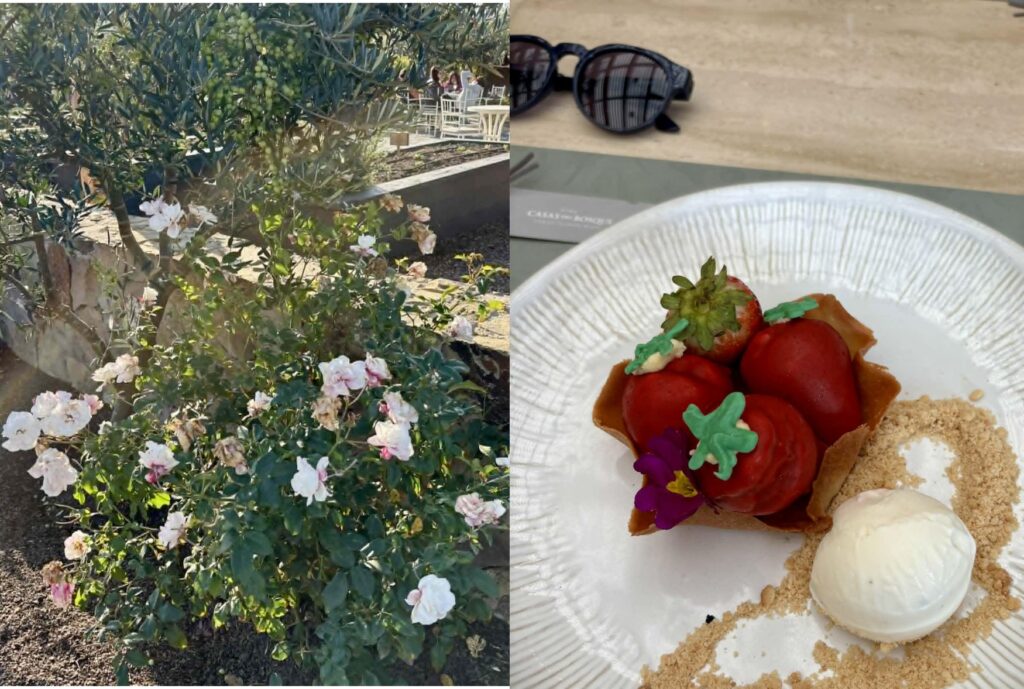
While I loved Santiago, it was refreshing to be out of the urban area where had spent our first few days. We were jovial after our wine tasting, enjoying the delicious lunch and lovely terrace setting. The restaurant was a great illustration of the unique assets of the region, as we learned about how the region competes with the capital city and invests in economic growth. It also made me excited to continue on to Vina Del Mar and Valparaiso, to see another part of Chile and see the Pacific Ocean.
by Jane Lloyd