A Final Stop to Spark Continued Learning: Gender Equity, Student Activism, and STEM Education at Universidad Técnica Federico Santa María
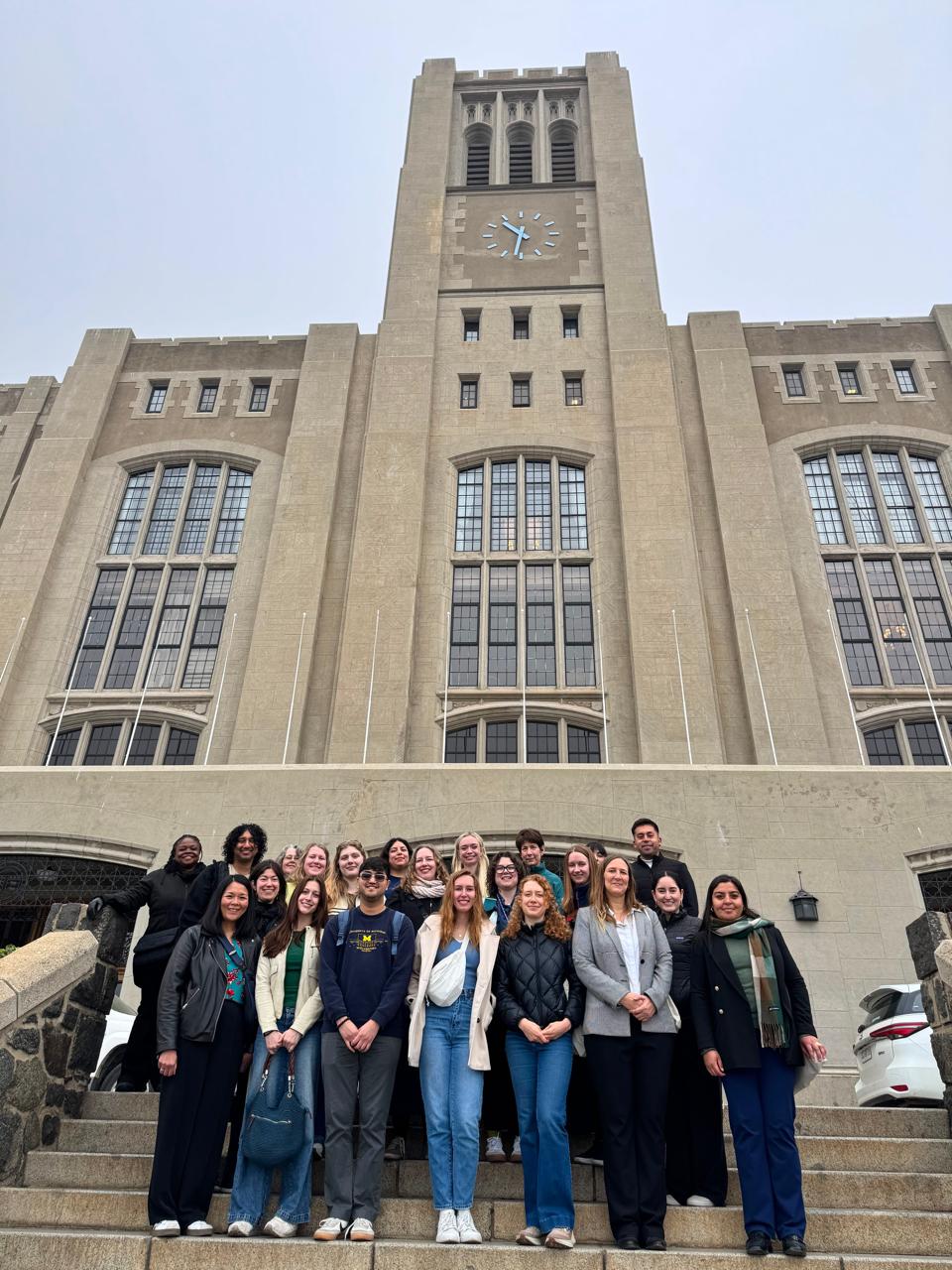
On the last full day of our time together in Chile, we loaded into the vans and headed to Valparaíso for our final institutional visit at Universidad Técnica Federico Santa María (UTFSM). As we entered the gates and wound our way up the hill, the striking Gothic architecture came into view, looming over the blue waters of the Pacific Ocean below. We were welcomed by Lydia Droegemueller, Director of the International Affairs Office, and members of her staff, who began our visit with a campus tour.

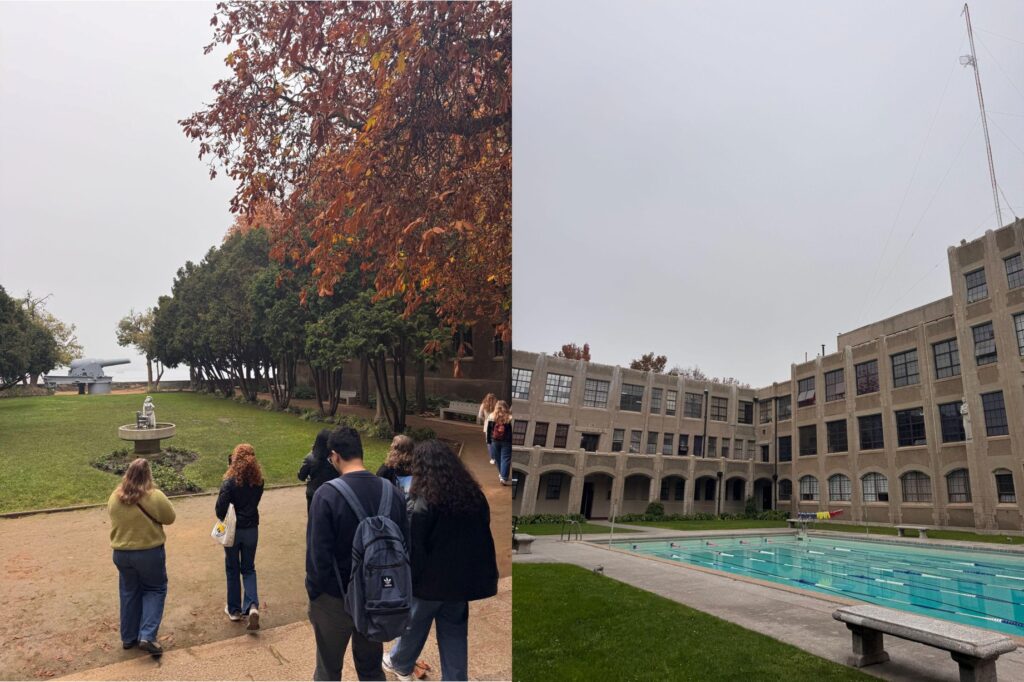
As we walked through the grounds, Lydia pointed out several unique aspects of the campus, including an urn containing the founder’s ashes that overlooks the ocean and a historic cannon that remained from when the site served as a strategic defense point for the city. One of the more memorable stops on the tour was a lap pool situated in the center of a courtyard surrounded by the Gothic buildings. Lydia explained that all first-year students take a required first-year sports course that utilizes the pool, but that it has also become central to some of their university traditions. For example, after defending their thesis, students are often tossed into the pool by friends and family in celebration. Our conversation about student life naturally expanded into a discussion of athletics, where Lydia reiterated a theme that emerged throughout our visit to Chile – unlike in the U.S., university sports are not a major source of school identity or fandom. Instead, sports enthusiasm is reserved largely for professional fútbol (American soccer).
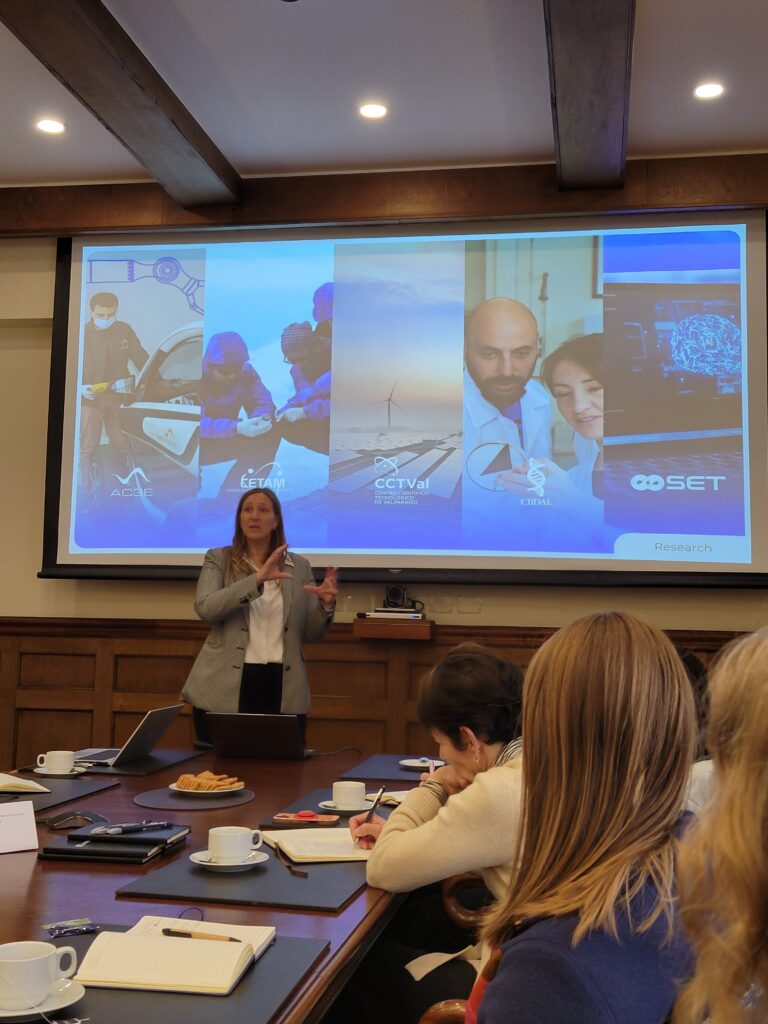
Following the tour, we gathered in a conference room where Lydia kicked off with an overview of UTFSM. Founded through the generous gift of their founder Federico Santa María, for which the institution is named, the university was established under the vision of creating educational opportunities for talented students who might not otherwise have access to higher education. Today, UTFSM serves approximately 23,000 students across five campuses (of which we visited their main campus) and is known for its strong emphasis on STEM education and research.
We then transitioned into a presentation from representatives of UTFSM’s Gender Directorate. Jael Rojas, along with Director Pamela Soto, discussed the historical context behind the office’s foundation, emphasizing the importance of the 2018 Mayo Feminista movement. This student-led movement demanded non-sexist education and improvements to institutional responses to gender violence and discrimination. Jael explained how this movement was pivotal to the establishment of the gender office at UTFSM, as well as to similar initiatives at other institutions across the country.
Jael walked us through the timeline of changes at UTFSM that followed this movement, including the establishment of protocols for addressing gender violence, the creation of gender-neutral restrooms, and updated degree language to include feminine forms (e.g., ingeniera in addition to ingeniero). The national response to the movement came in the form of Law 21.369, which required universities to adopt comprehensive policies and procedures related to gender discrimination and violence.
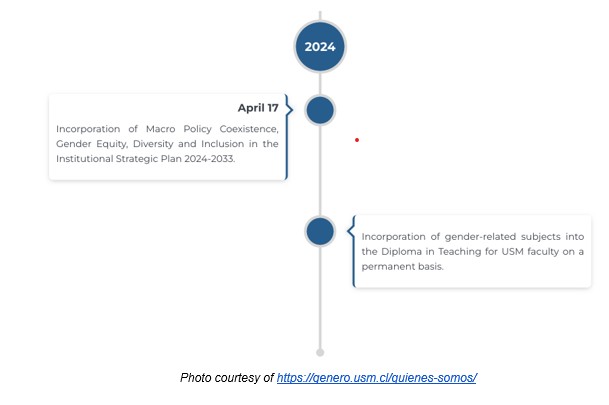
What struck me most was how recent many of these changes were; the Gender Directorate at UTFSM is nascent, having been formally established just a couple years prior, and Jael described the office as still being in its early stages with a relatively small staff. As students visiting from the U.S., this was an important context for us to understand. While efforts to address gender inequities have been slow in our system of higher education, many of the policies, offices, and institutional structures have existed for much longer. Hearing about a university navigating these changes in real time offered a unique perspective on both the opportunities and challenges of such efforts.
Jael then transitioned to highlighting data which demonstrates gender disparities in STEM, an especially important topic at UTFSM given its identity as a STEM-focused institution. While women now make up the majority of undergraduate students in Chile overall, they remain underrepresented in STEM fields, making up only 29.7% of enrollment nationally. However, Jael also highlighted encouraging signs of progress at their institution. Since 2018, UTFSM has seen gradual increases in women’s participation in STEM programs, which she attributes to initiatives such as special admissions pathways, targeted recruitment of women faculty, and efforts to incorporate gender perspectives into the curriculum.
During the subsequent Q&A session, our group asked questions that led to deeper conversations about the broader cultural and political context surrounding gender equity efforts in Chile. As had been the case throughout the week, it became clear how significantly Chilean universities are shaped by the society in which they operate, as is true for any university in any place. Jael spoke about generational shifts in attitudes toward gender and the challenges of sustaining momentum amid changing political landscapes, a concern which was all too familiar for our group. At the same time, she expressed optimism about the progress that has already been made and the protections that exist through national legislation following the 2018 student movement.
I left our visit reflecting on a theme that had surfaced repeatedly throughout our time in Chile: the power of student movements in creating change. We encountered this sentiment in conversations across multiple institutions, perhaps most notably during our meeting with student leaders at the Universidad de Chile. It was inspiring to see how student activism had influenced both institutional practices and national policy around issues of gender and socioeconomic equity and beyond.
As a group, we spent time throughout the trip discussing which aspects of these movements might translate to the U.S. context and where important differences between our systems exist. UTFSM provided a fitting final visit because it brought together many of the themes we had been exploring throughout the trip: access, equity, student voice, and the relationship between higher education and broader social change. While the trip itself was coming to an end, the learning certainly wasn’t. This visit left me with new perspectives, new questions, and much to continue reflecting on long after we returned home.
by Hayley Nielsen