
To jump back into university visits after the weekend, our group arrived at the Pontificia Universidad Católica de Valparaíso (PUCV). Our visit took place in the Industrial Engineering Department, in a classroom building in downtown Valparaíso. Javiera Espinoza von Bischhoffshausen traveled to Valparaíso with us, and we were met by Jimena Pascual, Head of the Industrial Engineering Department and Director of the InEs Gender Project, and Patricia Jimenez, Professor and Quality Assurance Coordinator at the Industrial Engineering Department. We were welcomed into a conference room with drinks, snacks, and time to chat before our sessions began.
To kick off the morning, Javiera provided context on both the university and the culture in Valparaíso. This context fit into our discussion with Álvaro Díaz Bustamante from the previous day, as we further explored how Valparaíso invested in higher education. Javiera showed us a video series that they use to recruit students, highlighting the prestige of the university and the welcoming city of Valparaíso. Their achievement of seven years of accreditation was featured throughout these videos, reflecting an important marker of prestige in the Chilean higher education system. As they prepare to be evaluated for re-accreditation in 2029, Javiera noted the pressure that they feel to maintain the highest level of accreditation.
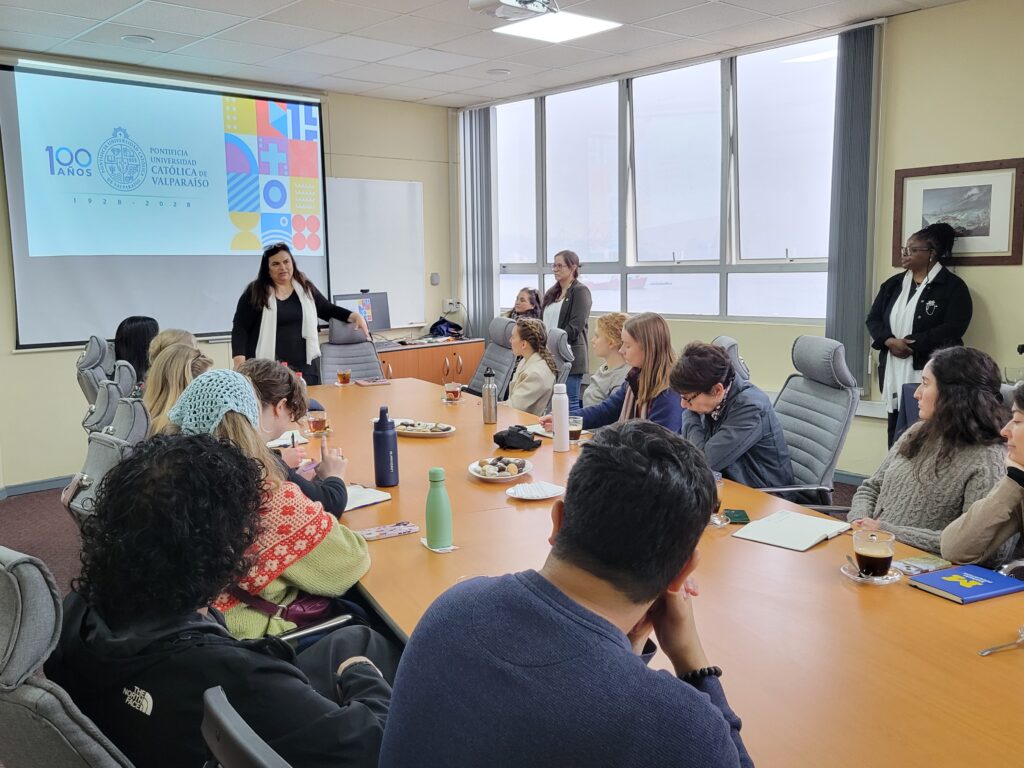
Next, Patricia Jimenez spoke on the quality assurance practices in engineering education. She explained that they use competency-based curricula for all of their programs. This framework was explained as a “backward design,” in which they start by establishing competency goals for students upon program completion, also known as an “exit profile” for students. Across the university, there are three categories of competencies: fundamental, professional, and disciplinary. To achieve these competencies, each student in the Industrial Engineering program must complete three mandatory internships at the operational, intermediate, and professional levels. Upon completion, supervisors at these internship placements write tailored assessments of the student, which then helps inform interventions to ensure that students are graduating with the outlined competencies. These internships are a required component of the Industrial Engineering program, as they assess students on their technical, professional, interpersonal, ethical, and attitudinal skills. Additionally, these internships serve students in finding work, as about 30% of students end up working full-time at their final internship placement site upon graduation.
Finally, Jimena Pascual shared with us about her work on gender equity at PUCV. She shared the importance of the national protests over gender equity in 2018, which had been brought up at previous university visits during our trip as well. These protests were very influential in shaping higher education policy in Chile, as the government responded by instituting regulations to monitor gender-based violence at universities. This policy sparked the creation of a new Gender Equity Office at PUCV, which is only about three years old. The goals of this office are to incorporate gender perspectives in all institutional processes, strengthen female leadership and participation in research and management, and have visible reporting on progress. Pascual shared that, even as the current government is reducing funding for many equity-based initiatives in universities, PUCV is striving to continue some gender-equity programs, such as their mentorship and leadership programs for women.
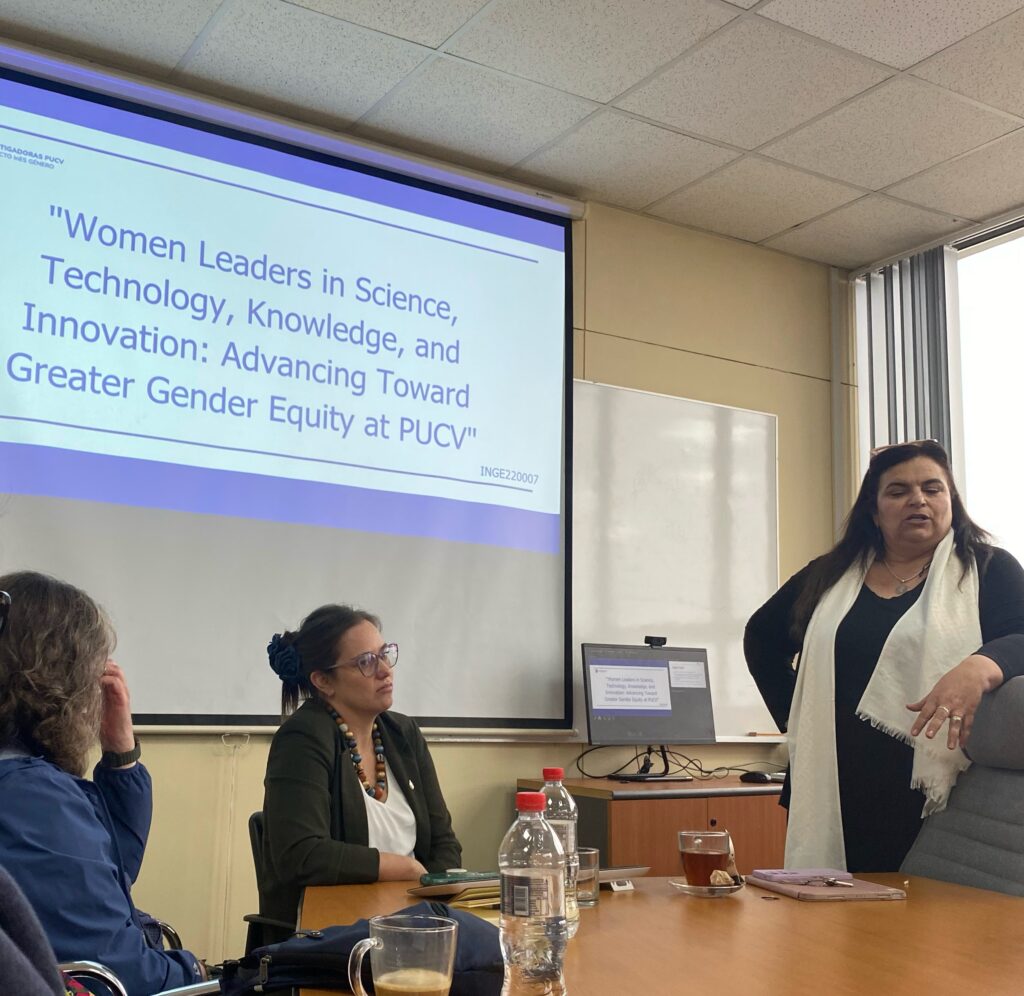
In many ways, the arc in which Chilean higher education institutions are developing equity-based initiatives feels similar to that of the United States, just with a few years of separation. As government funding and support for these programs decrease in Chile, many universities are left with new Gender Equity or Inclusion offices that are no longer receiving adequate support. This conversation with leadership at PUCV helped illuminate that even through governmental changes, there are people who care about providing high-quality, equitable education.
by Ella Smith